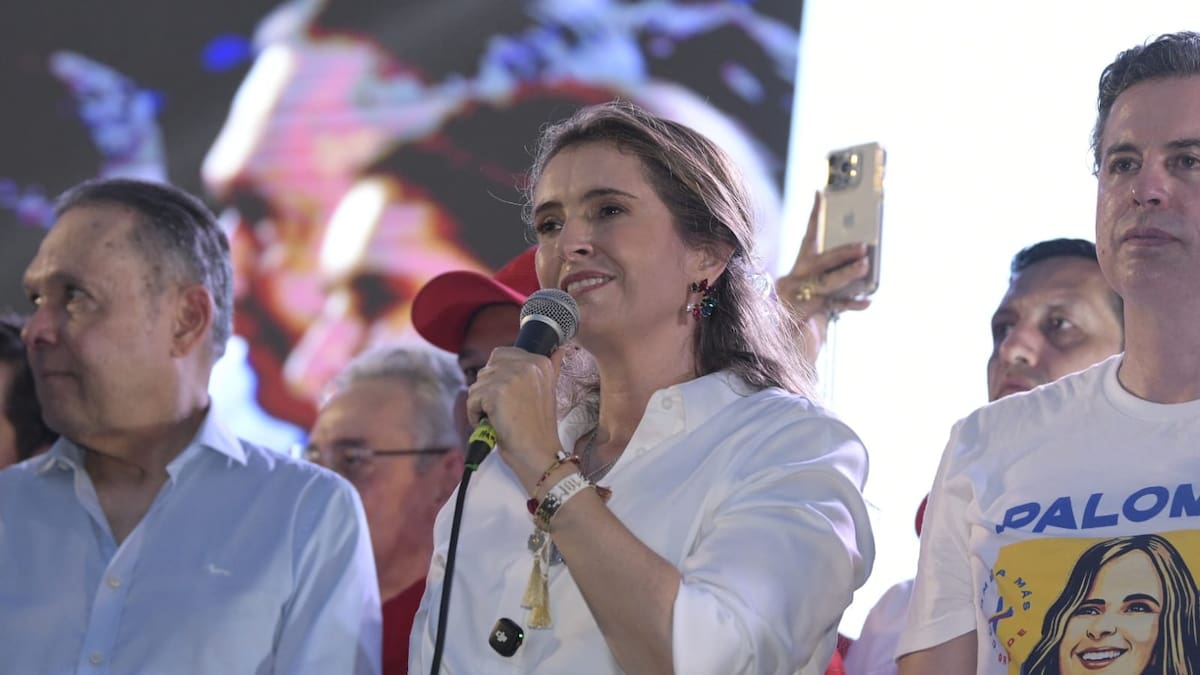
Senator Paloma Susana Valencia Laserna has become one of the most prominent figures of Colombia’s conservative opposition and is now one of the leading contenders in the country’s 2026 presidential race. — The 48-year-old politician, a member of the right-wing Centro Democrático party, secured her presidential candidacy after winning the coalition primary known as the Gran Consulta por Colombia, positioning herself as one of the strongest challengers to the progressive political movement currently governing the country.
Born in Popayán, in southwestern Colombia, Valencia has served in the Senate since 2014 and has built her political identity around a strong opposition to President Gustavo Petro’s administration, while maintaining close ties to former President Álvaro Uribe Vélez, the founder and most influential figure of Centro Democrático.
A Political Career Rooted in Conservatism
Valencia is widely recognized for her outspoken positions on security, economic policy, institutional reforms, and private-sector development.
Throughout her years in Congress, she has become one of the most visible voices defending conservative policies and criticizing left-wing governments. Her political discourse frequently focuses on restoring security, strengthening investor confidence, and promoting economic growth through private enterprise.
In interviews and campaign appearances, Valencia has argued that Colombia faces a critical political crossroads, where voters must choose between continuing the current government’s agenda or pursuing what she describes as a return to institutional stability and economic confidence.
A Family Legacy in Colombian Politics
Politics has long been part of Valencia’s family history.
She is the granddaughter of former Colombian President Guillermo León Valencia, who governed the country between 1962 and 1966. That political heritage placed her close to national public affairs from an early age and helped shape her interest in political debate and public service.
Before entering electoral politics, Valencia worked as a columnist and political analyst, commenting on national issues related to government, economics, and public policy. She later earned a seat in the Senate, where she consolidated her influence within Colombia’s conservative movement.
The Candidate Closest to Uribe
One of the defining aspects of Valencia’s political profile is her close relationship with former President Álvaro Uribe.
Uribe has repeatedly expressed support for her candidacy, describing her as a capable and principled leader. Although both have insisted that Centro Democrático follows an institutional process rather than personal endorsements, Valencia is widely viewed as the political figure most closely associated with Uribe’s legacy in the current presidential race.
Her campaign has focused heavily on issues traditionally linked to uribismo, including public security, military strengthening, economic growth, and opposition to negotiations with armed groups under the framework of the current government’s “Total Peace” policy.
An Attempt to Expand Beyond the Conservative Base
Despite her strong ties to the conservative right, Valencia has also sought to broaden her appeal.
One of the most notable moments of her campaign was the selection of former National Statistics Department (DANE) director Juan Daniel Oviedo as her vice-presidential running mate. Analysts interpreted the move as an effort to attract centrist, independent, and urban voters beyond the traditional uribista electorate.
Oviedo’s nomination generated significant discussion within Colombian politics because of his technocratic profile and his popularity among younger and moderate voters. Valencia argued that his inclusion reflected a broader coalition capable of representing different sectors of Colombian society.
A Polarizing Figure
Like many major political leaders in Colombia, Valencia inspires both strong support and strong criticism.
Supporters see her as a prepared legislator capable of restoring security and strengthening institutions. Critics argue that her candidacy remains deeply connected to Uribe’s political influence and question whether she represents genuine political renewal.
As Colombia approaches one of its most consequential elections in recent years, Paloma Valencia remains one of the central figures in the national debate, attempting to transform her congressional experience, political lineage, and connection to uribismo into a successful bid for the presidency.