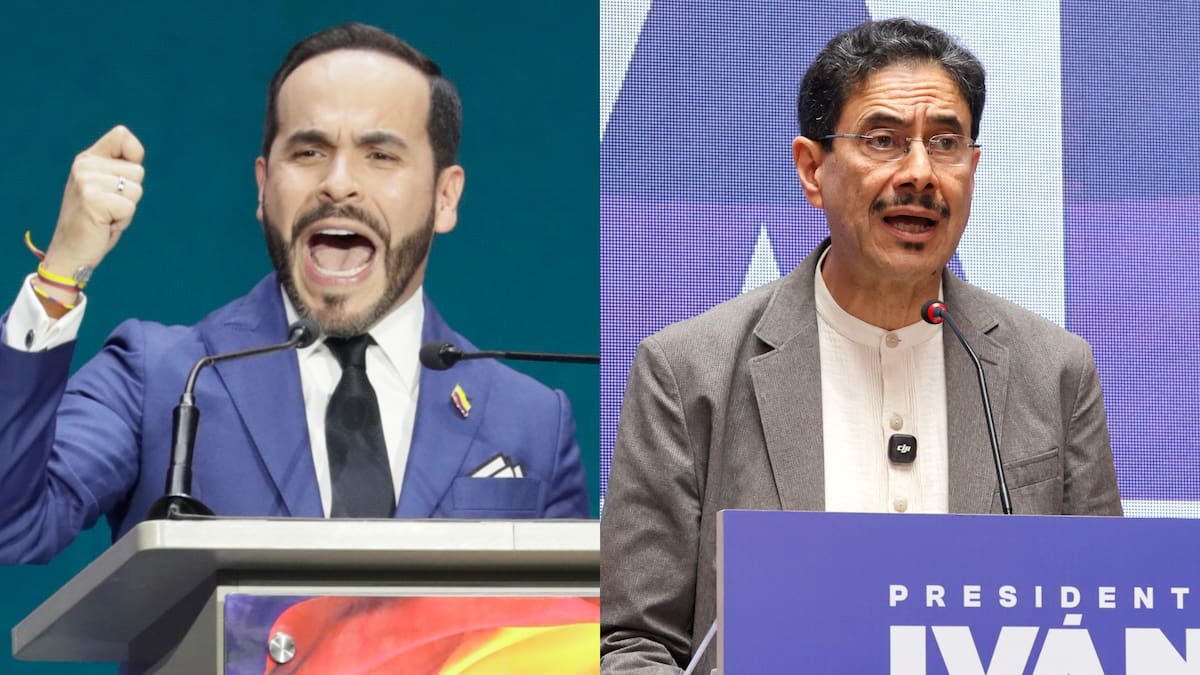
Colombia’s 2026 presidential election will move to a second round after no candidate secured the absolute majority required to win outright in Sunday’s first-round vote. — With most ballots counted, right-wing candidate Abelardo de la Espriella and left-wing senator Iván Cepeda emerged as the two leading contenders and will face each other in a runoff scheduled for June 21.
Read their profiles here:
Who Is Abelardo de la Espriella, the Lawyer Turned Into a Key Figure of Colombia’s Right Wing?
Iván Cepeda, the Face of Colombia’s Left Seeking the Presidency
De la Espriella, a lawyer and businessman who entered politics as an outsider, finished first in the preliminary results, while Cepeda, the candidate backed by the progressive coalition aligned with President Gustavo Petro, secured second place.
The outcome confirms months of polling that had consistently projected a runoff between the two candidates amid a highly polarized political climate. Surveys released during the campaign repeatedly showed Cepeda and De la Espriella as the strongest contenders in the race.
A Contest Between Two Opposing Political Visions
The runoff will present Colombian voters with two sharply contrasting political projects.
Cepeda, a longtime senator and human rights advocate, represents the continuation of many of the reforms promoted by President Gustavo Petro’s administration.
His campaign has focused on social justice, reducing inequality, strengthening public investment, and advancing peace initiatives with armed groups.
De la Espriella, meanwhile, has built his campaign around security, economic liberalization, and a hardline stance against crime. His proposals have frequently been compared to those of Salvadoran President Nayib Bukele due to their emphasis on tougher law enforcement and prison expansion.
Political analysts have described the runoff as a direct confrontation between the continuation of Colombia’s progressive political project and a conservative shift driven by demands for stronger security measures and institutional change.
A Polarized Election
The first-round election took place amid one of the most polarized political environments in recent Colombian history.
More than 41 million Colombians were eligible to vote, while the campaign was dominated by debates over security, economic reforms, energy policy, social inequality, and the future of Petro’s political legacy.
One of the biggest surprises of the night was the performance of conservative senator Paloma Valencia, who failed to reach the runoff despite being considered one of the strongest candidates earlier in the campaign.
As the country now turns its attention to the second round, both campaigns will seek to attract centrist, independent, and undecided voters who could ultimately determine the outcome of the election.
The winner of the June 21 runoff will assume office on August 7, 2026, becoming Colombia’s next president for the 2026–2030 term.